
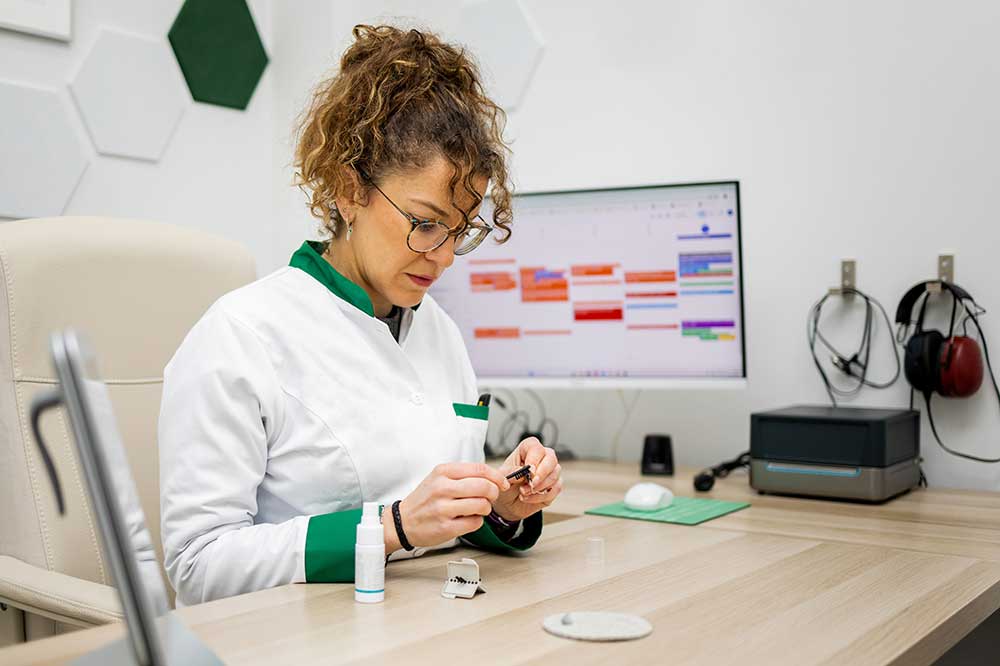
If your hearing aids suddenly sound quiet, crackly or stop working, the problem is often a small amount of wax or moisture, not a broken part. A regular cleaning routine keeps your hearing aids performing well and helps you avoid much of that frustration.
At Active Hearing Health in Omaha, our Doctors of Audiology, Dr. Nikki Kopetzky, Dr. Noel Griffith and Dr. Cindy Johnson, can show you how to care for your specific hearing aids and explain when they need professional cleaning. Using the right tools and steps each day and each week keeps sound clear and removes buildup without causing new problems.
How Often Should You Clean Your Hearing Aids?
Give your hearing aids a gentle wipe every day and a more careful check about once a week. Daily cleaning removes residue before it builds up around the microphones, earpiece and sound opening. Pick a regular time, such as right after you take them out at night.
Plan your weekly check based on your hearing aid’s instructions. You may need to clean more often if you make a lot of earwax, sweat heavily or spend time in humid places.
Wax filters, domes and tubing each need replacing on their own schedule. Check them often and change them when needed or as directed, rather than following one fixed calendar for everything.
Professional cleaning should go hand in hand with your home routine. Ask our team how often you should come in based on your hearing aids, how much wax you produce and your past maintenance needs. Our hearing aid repair service can help when home care isn’t enough.
Do Custom and Behind-the-Ear Hearing Aids Need Different Care?
Yes. Each style puts its tubing, speaker and openings in a different place, so cleaning steps vary. Traditional behind-the-ear hearing aids may send sound through a hollow plastic tube to a separate earmold. Some earmolds without electronics can be removed and washed if the manufacturer allows it. Never get the main body of the hearing aid wet.
Receiver-in-canal hearing aids have the speaker inside the earpiece, connected to the part behind your ear by a thin wire. Wipe these parts gently and follow the directions for caring for the dome and wax filter.
In-the-ear, in-the-canal and completely-in-canal hearing aids sit partly or fully inside the ear. Their surfaces, vents and sound openings come into contact with wax and skin oils. These small openings need gentle care and the right cleaning tools.
If you’re not sure whether an earpiece has electronics inside, ask before removing or washing it. Parts that look alike can need different care, so always follow your model’s instructions.
Your Daily Hearing Aid Cleaning Routine
Daily care only takes a few minutes. Turn the hearing aids off, wipe and inspect them, brush the microphone openings, then dry, store or charge them. Wash and dry your hands first, and work over a clean towel on a steady surface. Clean one hearing aid at a time so you don’t mix up the parts. Follow these steps:
- Turn the hearing aid off using its normal controls.
- Wipe the outside and the earpiece with a soft, dry cloth.
- Check the dome, earmold and sound opening for visible buildup.
- Gently brush across the microphone openings, pointing them down so debris falls away.
- Clean the charging contacts or battery area as directed.
- Dry, store or charge the hearing aids as recommended.
Wax is often easier to brush off after it dries overnight, so you can finish that step in the morning if needed.
For hearing aids with disposable batteries, you may be told to leave the battery door open overnight. Rechargeable hearing aids follow a different routine, so never try to open a sealed battery compartment.
Before putting your hearing aids back in, make sure any removable earpieces are firmly attached and everything is dry.
Signs Your Wax Filters, Domes or Tubing Need Attention
During your weekly check, look for wax that won’t come off, blocked filters, worn domes and tubing that is stiff, cracked or discolored. This closer look reaches spots a quick wipe can miss. Damaged parts may need to be replaced rather than cleaned again.
Change the wax filter when needed, using the exact type made for your hearing aid. Not every filter needs to be replaced every week. Use a vent cleaner or wax loop only in the places our team has shown you.
If your earmold can be washed, remove it as directed, clean it the approved way and let it and any washable tubing dry completely before putting it back on.
Check your charger and clean off dust or residue following its instructions. If buildup is hard to remove or the sound stays weak, schedule a professional cleaning.
Cleaning Mistakes That Can Damage Your Hearing Aids
Cleaning can accidentally damage your hearing aids if the electronics get wet, harsh chemicals are used, tools are pushed into openings or heat is used to dry them. Never put the hearing aid or an earpiece with a speaker inside into water. A water-resistant rating doesn’t mean your hearing aid can be washed.
Avoid dish soap, rubbing alcohol, peroxide and other chemicals unless your manufacturer specifically approves them. Even cleaners sold for hearing aids may not be safe for every part. Never spray cleaner directly into the openings.
Don’t push needles, pins or makeshift tools into the microphone or sound openings. Pressing harder can force wax deeper or damage the parts you’re trying to clean.
Keep your hearing aids away from hair dryers, microwaves and other high heat. Never take the casing apart to clean inside. If a part won’t come off easily or you’re not sure what it is, stop and ask for help.
Get Hands-On Hearing Aid Care at Active Hearing Health
The easiest way to build a cleaning habit is to practice on your own hearing aids with an expert. During your visit, Dr. Nikki, Dr. Noel or Dr. Cindy can review your hearing aids, your hearing concerns and your daily listening goals, then walk you through the cleaning steps your model needs. We service most major brands, even if you didn’t buy your hearing aids from us.
Call (402) 318-7863 or contact Active Hearing Health to schedule a hearing aid care appointment at our office at 18010 R Plaza, Suite 107, in Omaha.
This information is for educational purposes only and is not medical advice. For personalized care, please schedule an appointment.