
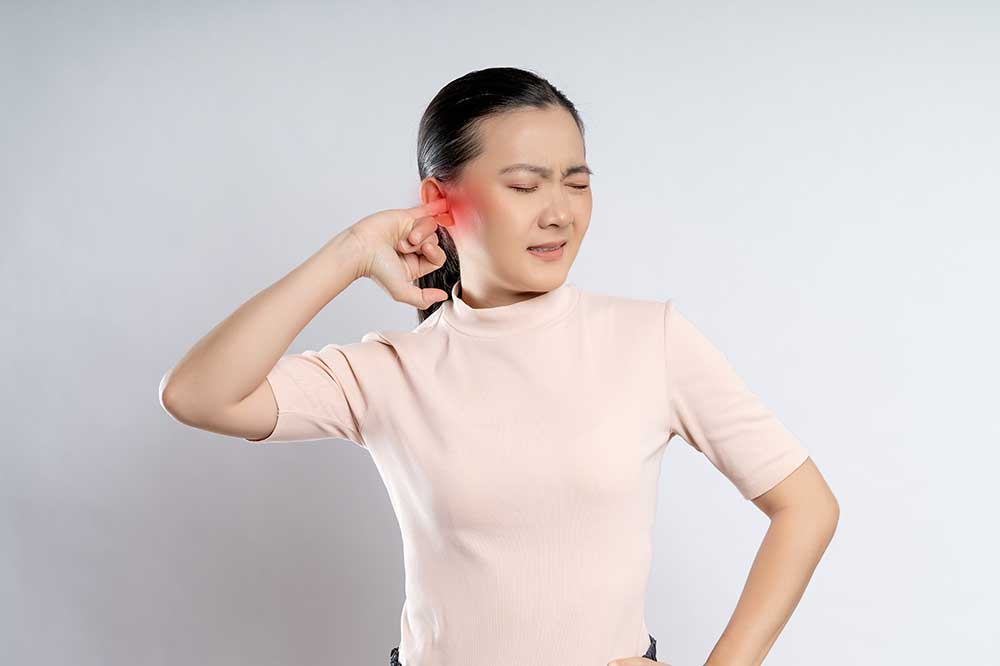
A plugged ear can make voices sound dull and far away, and it can be puzzling when earwax isn’t the reason. At Active Hearing Health in Omaha, our Doctors of Audiology, Dr. Nikki Kopetzky, Dr. Noel Griffith and Dr. Cindy Johnson, help patients understand what may be causing ear fullness and decide on the best next step. That includes a referral for medical care when needed.
The most common reasons an ear feels blocked are pressure changes, fluid buildup and changes in hearing. Our team can also help you choose safe ways to find relief at home and know when a plugged feeling needs prompt medical care.
What Causes a Plugged Ear When It’s Not Earwax?
When earwax isn’t the problem, ear fullness usually comes from pressure behind the eardrum, fluid in the middle ear or another condition that affects your hearing. A clogged feeling is a symptom, not a diagnosis, so finding the source is important.
One frequent cause is eustachian tube dysfunction. The eustachian tubes link the middle ear to the back of the nose. They help balance pressure and let fluid drain. Colds, allergies and nasal swelling can keep them from working properly. Air travel, such as a flight out of Eppley Airfield, can also cause a pressure imbalance.
A middle ear infection can make your ear feel full, and fluid may stay behind even after the infection is gone. Jaw joint problems can feel similar, especially if you also have jaw pain or clicking. Inner ear conditions such as Ménière’s disease may cause fullness along with hearing changes, ringing or dizziness.
Even if you can’t see any wax, there could still be a blockage deeper in the ear. An exam is the best way to find out what’s really going on.
Could It Be a Eustachian Tube Problem?
A eustachian tube problem may be to blame if your ear feels full along with muffled hearing or popping, especially if it starts with a cold, changes with allergies or happens when you fly. This condition, called eustachian tube dysfunction (ETD), can affect one ear or both. Common symptoms include:
- Pressure or fullness in the ear
- Muffled hearing or a feeling of being underwater
- Popping, clicking or crackling sounds
- Ear discomfort or pain
- Ringing in the ears
In obstructive ETD, the tube doesn’t open well enough, which makes it hard to balance pressure and drain fluid. In patulous ETD, the tube stays open too much. When that happens, your own voice or breathing may sound unusually loud.
These two types need different care, so repeatedly trying to pop your ear doesn’t always help. A hearing test can show whether your hearing has changed, and middle ear testing can help show whether pressure or something else is involved.
Home Remedies for a Mildly Blocked Ear
If a cold or pressure change is behind your symptoms, you can often get relief at home with steps that help the eustachian tubes open:
- Swallow often or sip water.
- Yawn gently to help the tubes open.
- Chew sugar-free gum, as long as it doesn’t bother your jaw.
- Use a saline nasal spray to relieve congestion.
Some people find relief with gentle pressure equalization. Close your mouth, pinch your nose and blow very softly. Never force it, and stop if you feel pain or dizziness. Check with a healthcare provider first if you have an ear infection, drainage, a known hole in your eardrum or recent ear surgery.
Skip cotton swabs, ear candles and ear flushing when you don’t know the cause. Earwax drops won’t remove fluid trapped behind a healthy eardrum.
When to Get Your Clogged Ear Checked in Omaha
Get medical care right away if your ear suddenly feels blocked and your hearing becomes muffled or reduced, especially in one ear. Sudden sensorineural hearing loss can feel just like congestion or wax, even without pain. Treatment works best when it starts quickly, so don’t wait to see if home remedies help.
You also need prompt medical care for severe ear pain, drainage, fever, significant dizziness or symptoms after an injury or sudden pressure change. These may be signs of infection or damage.
Make an appointment if the fullness keeps coming back, makes it hard to communicate, affects only one ear without a clear reason or doesn’t improve as your cold clears up. Mild symptoms that last more than two weeks should also be checked.
Keep track of when the feeling started and whether it changes when you swallow, travel, move your jaw or have nasal symptoms. These details help guide your evaluation.
Medical Treatments for a Clogged Ear That Won’t Clear
Treatment for a stubborn clogged ear depends on what is causing it. Options may include allergy medicine, treatment for an infection, monitoring fluid in the middle ear or a procedure performed by an ENT specialist for ongoing problems. A hearing evaluation, including a look inside the ear canal and a test of middle ear function, is often the first step. If a medical cause is likely, a physician or ENT specialist may examine your eardrum, nose and the openings of the eustachian tubes.
When allergies play a role, a steroid nasal spray or an antihistamine may help. These medicines don’t treat every type of ETD. Antibiotics may be needed for some bacterial infections, but they are not usually used for simple fluid buildup or viral congestion.
Fluid without infection often improves on its own with time and follow-up visits. For long-lasting middle ear problems, an ENT specialist may suggest placing a small ventilation tube in the eardrum. Balloon dilation may be an option for some people with chronic obstructive ETD. This procedure uses a tiny balloon to widen a narrowed part of the eustachian tube.
Fullness related to the jaw may need dental or other specialized care. Inner ear conditions require their own treatment plan. Every option has limits and possible risks, so talk them through with your physician before moving forward.
Talk With Active Hearing Health About Your Clogged Ear
Ongoing ear fullness deserves answers. Dr. Nikki, Dr. Noel and Dr. Cindy can test your hearing, review your symptoms and help you choose the right next step, whether that’s monitoring, hearing care or a referral to a physician.
Call (402) 318-7863 or contact Active Hearing Health to schedule a visit at our office at 18010 R Plaza, Suite 107, in Omaha.
This information is for educational purposes only and is not medical advice. For personalized care, please schedule an appointment.